The Last Book Shelf
Download

The Speculator's Path

"What does the hunger for money do to a mind, a market, and a life?"

Start with Mackay in 1841, cataloging tulip-crazed Dutchmen, and you'll recognize every face in the two centuries that follow. Lefèvre's Reminiscences of a Stock Operator still reads like the truest account of what a trade feels like from the inside, and Kindleberger shows the same fever returning on schedule, crash after crash. Then the wreckage gets specific: Lords of Finance on the bankers who botched the Depression, When Genius Failed on Nobel laureates undone by their own leverage. It closes with Hernan Diaz's Trust, a novel that knows fortune is mostly a story the rich tell about themselves.

9 books~32 weeksModerate
1
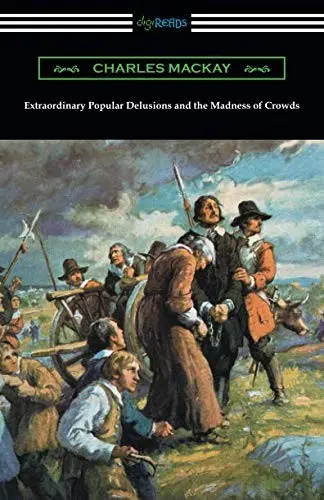
Extraordinary Popular Delusions and the Madness of Crowds
Charles Mackay · 1841

The original book on market manias. Mackay's chronicle of the Dutch Tulip Mania, the South Sea Bubble, and the Mississippi Scheme remains the most vivid account of how collective delusion drives markets to extremes. Victorian prose, but the human dynamics are identical to every modern bubble from dot-com to crypto. The specific technology changes; the madness never does.

2
The Money Game
The Money Game
George J.W. Goodman · 1968

The most literary book on Wall Street, written under the pen name 'Adam Smith.' Goodman captures the 1960s markets with novelistic flair and devastating psychological insight. His metaphor of 'the Game' reveals that most market participants are driven by unconscious motivations and identity needs as much as financial analysis. The market as mirror.

3
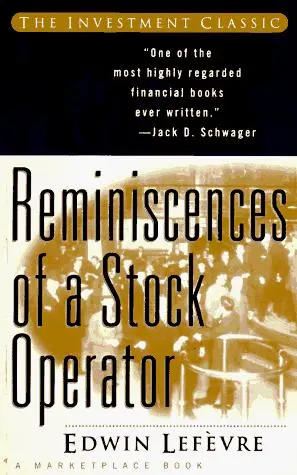
Reminiscences of a Stock Operator
Edwin Lefèvre · 1923

A fictionalized account of legendary speculator Jesse Livermore. A century old, it remains the single best exploration of market psychology, speculation, and the emotional rollercoaster of trading. Every emotional mistake an investor can make is depicted here with novelistic vividness. Recommended by virtually every professional trader who has ever been asked for a reading list.

4
Manias, Panics, and Crashes
Charles Kindleberger · 1978

The anatomy of financial crises across centuries using the Minsky-Kindleberger model: displacement, credit expansion, euphoria, critical stage, and revulsion. The pattern repeats with eerie consistency because it's driven by human psychology, not specific instruments. More academic than Mackay, but with a proper economic framework that actually explains the mechanism of contagion.

5
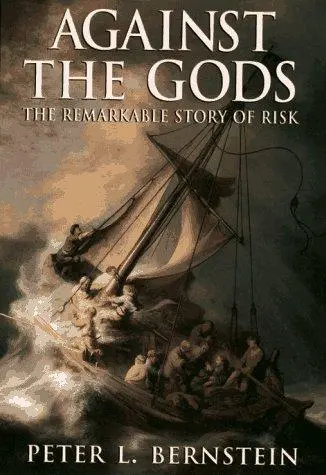
Against the Gods: The Remarkable Story of Risk
Peter L. Bernstein · 1996

The intellectual history of humanity's attempt to understand risk — from ancient Greek gambling through Pascal's wager, Bayes' theorem, Gauss's bell curve, Markowitz's portfolio theory, and Black-Scholes. Bernstein shows how probability and risk management transformed investing from gambling into a rational enterprise. The rare book that makes the history of mathematics genuinely thrilling.

6
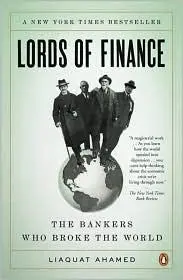
Lords of Finance
Lords of Finance
Liaquat Ahamed · 2009

The Pulitzer Prize-winning account of four central bankers — of the US, Britain, France, and Germany — whose decisions in the 1920s and 1930s crashed the global economy and triggered the Great Depression. Ahamed turns monetary policy into a page-turner, showing how ego, orthodoxy, and the gold standard turned a recession into a catastrophe. The book that makes you understand why central banks matter more than stock picks.

7
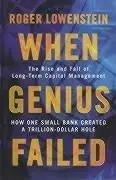
When Genius Failed
When Genius Failed
Roger Lowenstein · 2000

The riveting story of Long-Term Capital Management — a hedge fund staffed by Nobel laureates that nearly destroyed the global financial system in 1998. Despite the most sophisticated risk models ever built, LTCM was undone by leverage, hubris, and model failure. The cautionary tale that proves intelligence and sophistication are not protection against catastrophe.

8
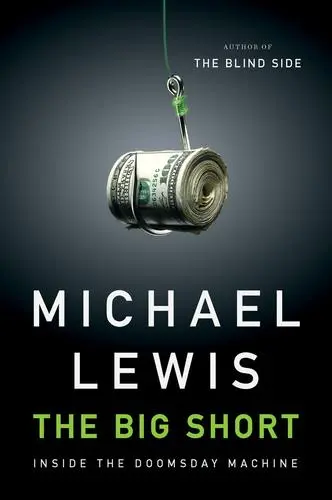
The Big Short
The Big Short
Michael Lewis · 2010

The story of the handful of investors who saw the 2008 crisis coming and bet against housing. Through Michael Burry, Steve Eisman, and others, Lewis reveals the incompetence and conflicts of interest that enabled the catastrophe. Burry read the actual mortgage bond prospectuses — something almost nobody on Wall Street had done — and realized the entire system was built on loans that could never be repaid.

9
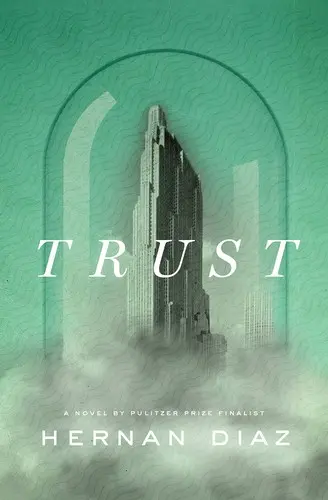
Trust
Trust
Hernan Diaz · 2022

Four nested narratives about wealth, narrative authority, and who gets to tell the story of American capitalism. Diaz constructed a puzzle box that rewards every layer of attention and asks genuinely hard questions about whose version of history we inherit. Technically dazzling and morally serious at once.

Unlock Reading Paths
This feature is available with Last Book Shelf Pro
Back to Home