The Last Book Shelf
Download

Reading the Animal Mind

"What goes on behind an animal's eyes, and what does our answer say about us?"

Start with Melville's white whale, the animal as a wall you can't see past, then drop straight inside the rabbits' own language and myth in Watership Down. Leopold learns to think like a mountain; Hughes hammers out a crow-god with no mercy in it; Matthiessen climbs toward a cat he never finds. David Foster Wallace stands at a Maine festival and asks whether the lobster in the pot is in pain, Helen Macdonald grieves through a goshawk's hunger, and Laura Jean McKay imagines a plague that forces us to actually hear what the animals have been saying. Philip K. Dick closes the loop by asking whether a fake sheep deserves your pity.

9 books~31 weeksModerate
1
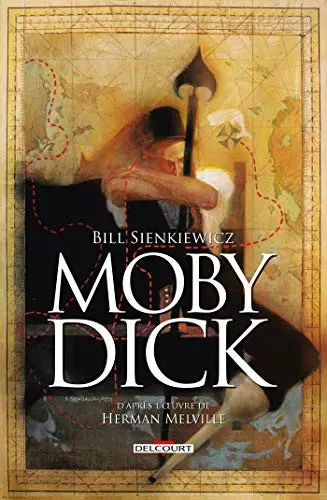
Moby-Dick
Moby-Dick
Herman Melville · 1851

A whaling voyage that becomes a meditation on obsession, masculinity, race, God, and the indifference of nature. Melville's prose is oceanic, alternately beautiful and exhausting. It failed commercially in 1851 and was barely read for decades. Now it defines the outer limit of what American fiction has attempted.

2
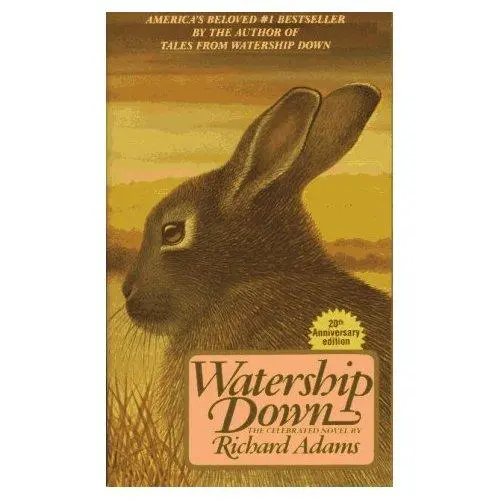
Watership Down
Watership Down
Richard Adams · 1972

An epic fantasy told entirely through rabbits, complete with its own mythology (*El-ahrairah*), sociology, and politics. Adams's refugee narrative is a powerful allegory that never draws attention to itself as allegory.

3
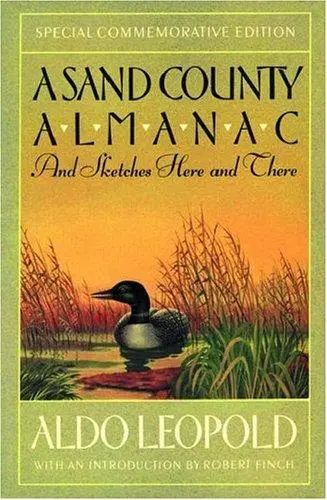
A Sand County Almanac
Aldo Leopold · 1949

Leopold articulated the "land ethic," the idea that humans are members of the ecological community, not its masters. His description of a year on a Wisconsin farm and his philosophical essays on conservation founded the field of environmental ethics. The most quietly radical argument in American environmental literature.

4
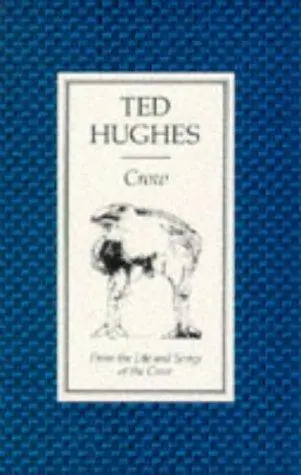
Crow
Crow
Ted Hughes · 1970

Listed separately from the Collected because Crow demands it. This is the collection that divided British poetry and still hasn't been absorbed. Hughes's crow is creation's mistake, God's embarrassment, the principle of life that persists despite everything. The sequence draws on Native American trickster mythology, Norse cosmology, and an almost Gnostic vision to produce existence as black comedy. No British poet had written anything so bleak or so funny since Milton made Satan.

5
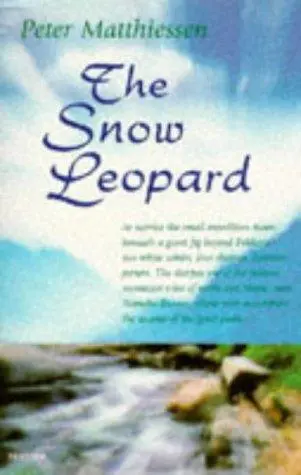
The Snow Leopard
The Snow Leopard
Peter Matthiessen · 1978

Matthiessen trekked to the Himalayas of Nepal to study the Himalayan blue sheep and wrote a meditation on Buddhism, grief (his wife had just died of cancer), and the nature of searching. The snow leopard is almost never seen. That's the point.

6
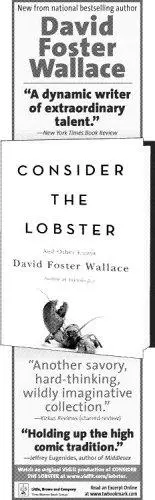
Consider the Lobster
David Foster Wallace · 2005

DFW brought hyper-intelligence, footnote culture, and genuine moral anxiety to the essay form. Essays on Kafka, John McCain, talk radio, the Adult Video News Awards, and (the title piece) a lobster festival. The central question throughout: how do we live ethically in a media-saturated world?

7
H is for Hawk
H is for Hawk
Helen Macdonald · 2014

After her father's sudden death, Macdonald trained a goshawk named Mabel and wrote a book that is simultaneously a grief memoir, a falconry manual, and a literary biography of T.H. White. The combination shouldn't work. It works completely. Won the Samuel Johnson Prize and the Costa Book of the Year because nobody could figure out which category it belonged in.

8
The Animals in That Country
Laura Jean McKay · 2020

A virus gives humans the ability to understand animal communication. Part road trip novel, part speculative fiction masterpiece about what we'd actually hear if animals could speak. Won multiple Australian prizes and represents the best of literary speculative fiction from outside the usual centers.

9
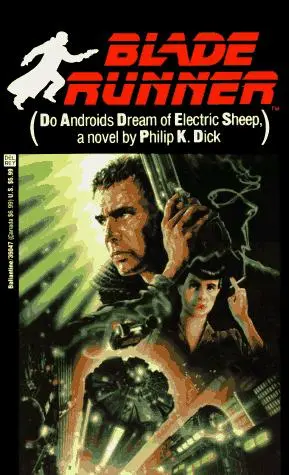
Do Androids Dream of Electric Sheep?
Philip K. Dick · 1968

Dick's true subject is always empathy: what it is, whether it can be faked, whether its absence makes you less than human. The novel that *Blade Runner* adapted asks deeper questions than the film. What does it mean to feel?

Unlock Reading Paths
This feature is available with Last Book Shelf Pro
Back to Home