Consider the Lobster
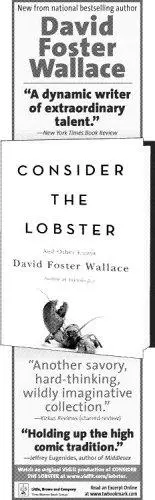
DFW brought hyper-intelligence, footnote culture, and genuine moral anxiety to the essay form. Essays on Kafka, John McCain, talk radio, the Adult Video News Awards, and (the title piece) a lobster festival. The central question throughout: how do we live ethically in a media-saturated world?
Host, the talk-radio profile, trades Wallace's usual footnotes for a boxed-and-arrow sidebar layout that several readers call more disorienting than illuminating; one names it “the one thing I don't like” in the whole collection despite liking the reporting underneath it. Authority and American Usage runs past sixty pages on grammar and usage, and even fans admit the argument is fully made long before the essay lets go. The Updike piece draws the sharpest complaint of all: a critic calls it plainly “a negative review of John Updike” rather than a review of the novel it's supposed to cover. A harsher critic argues the title essay itself is “devoid of anything like an organizing thought,” with Wallace's erudition reading as showing off rather than genuine curiosity. How Tracy Austin Broke My Heart and the Dostoevsky essay are the two pieces readers most often admit to skimming.
The case for it and the rest of the canon open with Pro.