Memoir
One life, on the page, with nothing held back.




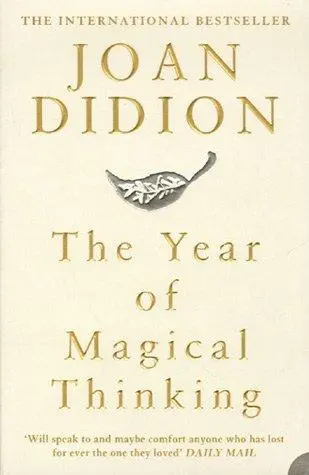

Every book in this wing is a person deciding what to do with what happened to them. Nabokov turns memory into stained glass in Speak, Memory. Didion’s Year of Magical Thinking is grief with the sentimentality burned off: she copyedits her own catastrophe, and it devastates precisely because she will not weep on the page. Wiesel’s Night is here, brief and unanswerable. I hold this shelf to one hard rule: the writing must survive the story. Plenty of astonishing lives make dull books, and a quiet life, written exactly, can outlast an empire’s archives. These are the ones that were written, not merely lived.
The wealth on display reads to a number of modern readers as tone-deaf rather than nostalgic: the estate's roughly fifty servants draw specific complaint, one reader flagging the picture flatly as “like 40 servants privileged,” the people doing that labor left backgrounded throughout. The dense, clause-heavy prose that wins fans wears other readers down the same way; more than one comparison lands on Melville, and one reader says she was left “reminded of Melville’s obsessive digressions” rather than swept along. Family members surface oddly late, chronology jumps without warning, and the whole aristocratic setting strikes some readers as “eye-rollingly bourgeois” on a modern read. The book also stops in 1940, exactly as Nabokov leaves for America, skipping the novels that actually made him famous.
— against Speak, Memory
Status stays visible even in the memoir’s most intimate scenes. Reviewers point to Didion identifying a friend who eulogized her husband as “the great essayist David Halberstam,” a small tell, they argue, for wealth and connections that surface everywhere else too, Malibu real estate and fine china among the repeated targets. Others find the narrating voice too composed to land, seizing on a hospital social worker’s own description of her as “a pretty cool customer.” A parody circulating among detractors renames the book “The Year of Entitled Thinking,” and the harshest reviews call the tone “self-pitying, whiney, self-important,” arguing research-heavy digressions read as intellectualizing distance rather than actual grief on the page.
— against The Year of Magical Thinking
Skeptical readers keep asking where the money came from, tuition, a car, rent to move to Utah, for a family otherwise presented as isolated and scraping by. One writes plainly, “money and rent to get to Utah came from somewhere,” and another questions the string of severe injuries treated only with home remedies, calling out “the number of life-threatening injuries and survived to tell about.” A third simply “could not buy into what was being set forward.” The doubt isn't only a reader's guess: Westover's family has said through an attorney that the book holds only “a little germ of truth,” and at least one sibling has said on record that she reframes what other family members did or felt. Some readers add that no outside adult ever intervened despite how visible the danger sometimes was.
— against Educated
These 22 works open with Pro.