History
What actually happened, argued over ever since. Herodotus to Snyder.

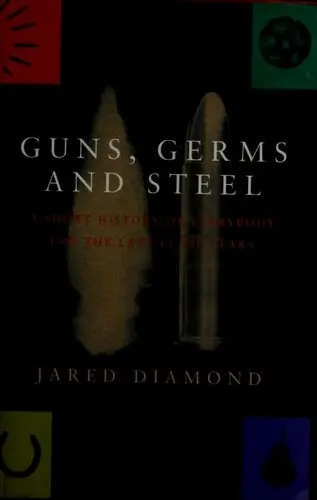

This wing was carved out of Non-Fiction because the historians kept colonizing every other shelf, which is what historians do. Herodotus starts the whole enterprise with gossip he half believes; Thucydides answers him two shelves down with a war he watched lose its mind. Gibbon will keep you a year and repay every month of it. Be warned: nothing in this room stays settled. Zinn and the generals fight nightly after close, and the Annals of Tacitus reads like this morning’s feed with better prose. Every empire in here was certain it was permanent. That is the standing lesson of the wing, and the reason it earns its own door.
The length plus the digression is the complaint, the Egypt sections singled out as a detour that runs far past its welcome, one reader calling the whole thing “a monster Wikipedia rabbit hole, with some pointless anecdotes.” People log multi-week slogs and describe finishing as willed rather than pleasurable: “it took some serious motivation to get it done.” The credibility grates: gold-digging ants and folk tales reported without clearly separating what he saw from what he was told. And which translation to start with, de Selincourt or Holland or the annotated Landmark, is a live decision readers keep relitigating before they even begin.
— against The Histories
It restates the domestication argument chapter after chapter, “beating a dead horse,” and readers joke the title oversells, that the honest one would be “Germs, More Germs and a bit about Steel and Guns, but not very much on those last two really.” It “reads more like a lengthy scientific essay than a non-fiction book aimed at the general public.” Historians push hard on the geographic determinism, calling the whole “an exercise in speculation masquerading as fact,” and readers flag “the douche-y social Darwinist parts.” A 2024 study found “no support for his argument that key areas of Eurasia are more ecologically homogeneous,” concluding “chance, and perhaps factors that promoted colonial empires, need to be more seriously considered.”
— against Guns, Germs, and Steel
It predates decades of archival material, especially the Soviet-bloc archives that opened long after 1960. A specific complaint recurs: Shirer repeatedly labels Röhm with a slur for his homosexuality while barely covering the regime's own persecution of gay people. Coverage is “relatively weak on the Holocaust” next to how much space everything else gets. The underlying thesis explains Nazism by an authoritarian German national character, and the “extremely biased pro-American perspective” flattens the leadership into “cartoonish version of evil,” a “sweeping certainty” that “sometimes leaves less room for ambiguity.” And “a lack of maps” means readers cannot follow the campaigns.
— against The Rise and Fall of the Third Reich
These 42 works open with Pro.