Business & Investing
The books that change how you think about money, markets, and decisions. Graham to Taleb.
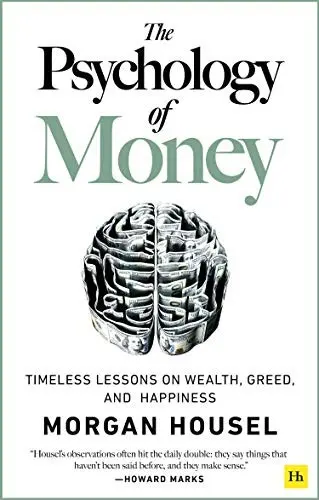


Most money books are one sentence in a trench coat. This shelf is the exceptions. Graham’s Intelligent Investor is genuinely dull and genuinely permanent; margin of safety has outlived every hot strategy since 1949. Housel will tell you money is behavior, not math, in chapters short enough to finish before you rationalize something expensive. Malkiel’s Random Walk has been annoying stock-pickers for fifty years by being right on average. Fair warning from your librarian: anyone promising alpha in a paperback is selling the paperback. What survives here is older and stranger: books about fear, patience, and compound interest, which is to say books about you.
The first ten chapters are widely called a slog that repeats itself, and one reader says flatly “the first 10 chapters were a drag,” adding “they should’ve been 10 pages max.” The old bond and railroad-company examples read to many as a history document rather than a working manual, and newcomers report getting lost without stock-market vocabulary the text assumes they already have. Multiple reviewers call the prose dry or dense enough that they gave up before reaching the payoff, one admitting the read was “so long and so dry it’s taken me foreverrrrrr to get through.” A recurring complaint holds that the unannotated 1949 original is close to unusable without Jason Zweig’s added commentary, and that buying an edition without it is a mistake. A handful of reviews call the book simply “too old to have a lot of relevance now” for a modern retail investor’s actual decisions.
— against The Intelligent Investor
Twenty short chapters, each built on one story, and readers who already follow personal finance say every idea here was already familiar: save more, stay humble about luck, don’t chase performance. One reviewer sums it up bluntly: “I highlighted nothing. I can’t name any insight I didn’t already know.” Another calls the register “too LinkedIn-esque for my taste,” a knock on the aphoristic, motivational-post tone that runs the length of the book. A common tip passed between disappointed readers: “jump to chapter 19 to save yourself,” since it compresses everything the first eighteen chapters took to say. The same Buffett-and-janitor anecdotes carry the argument in chapter after chapter, and more than one reviewer says flatly, “this could have been an email.” Fine for a total beginner; thin for anyone who has read a finance book before.
— against The Psychology of Money
The middle chapters settle into a rhythm readers find grinding: a school of thought gets laid out, then methodically knocked down, cycled through school after school until it reads like padding. One reviewer complains the book “immediately back pedals & delves into another story from history,” finding the cycle infuriating well before it lets up. A sharper complaint is that Malkiel stacks the deck for his own efficient-market theory rather than testing it fairly, with one reader arguing “you should always test the opposite of what your theory stipulates.” Critics of the thesis itself point out that “quantitative hedge funds demonstrate pattern recognition works in the real world,” undercutting the book’s core claim. Some call the whole project “a repackaged version of the same garbage investment firms have fed” clients for decades, and note the concrete buy-this advice is buried until the very end.
— against A Random Walk Down Wall Street
These 51 works open with Pro.