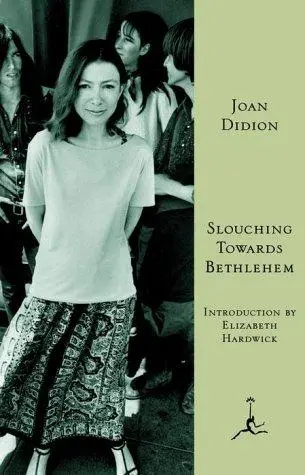
Slouching Towards Bethlehem
Didion's first collection is arguably her best: the Haight-Ashbury essay, the John Wayne essay, "On Self-Respect," "On Keeping a Notebook." She invented a new mode. Personal journalism that diagnosed the culture through the writer's neurosis.
Haight-Ashbury supplies the most famous essay here, and also the most contested one: Didion spends the piece among teenage runaways and drug users without a single named source pushing back, and the real Diggers she wrote about denounced the result at the time as “media poisoning.” Distance draws complaint elsewhere in the book too. Readers call her subjects “fucked-up, drained, and wasted” rather than people who get to speak in their own words. Her refusal to put her own politics on the page draws its own line, “her unwillingness to open her subjectivity up to the world,” and a second reader calls the book overall “an entitled white person busy reflecting a narrow slice of the world.” Skip the 1964 Hollywood profile if you’re pressed for time; even fans call it the most dated thing in the collection.
The case for it and the rest of the canon open with Pro.