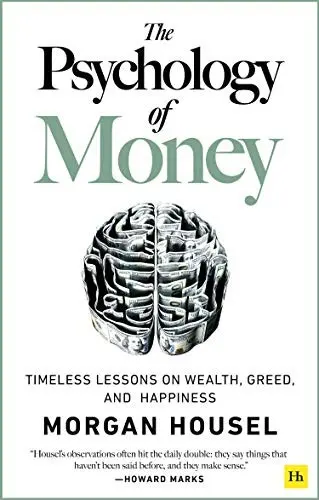
The Psychology of Money
Nineteen short stories proving that financial success is more about temperament than intellect. The gap between good and bad outcomes is almost entirely behavioral. Housel argues you need to know yourself before you can know the market, and that getting wealthy and staying wealthy are completely different skills. The decade's defining finance book, born from a blog post that wouldn't stop spreading.
Twenty short chapters, each built on one story, and readers who already follow personal finance say every idea here was already familiar: save more, stay humble about luck, don’t chase performance. One reviewer sums it up bluntly: “I highlighted nothing. I can’t name any insight I didn’t already know.” Another calls the register “too LinkedIn-esque for my taste,” a knock on the aphoristic, motivational-post tone that runs the length of the book. A common tip passed between disappointed readers: “jump to chapter 19 to save yourself,” since it compresses everything the first eighteen chapters took to say. The same Buffett-and-janitor anecdotes carry the argument in chapter after chapter, and more than one reviewer says flatly, “this could have been an email.” Fine for a total beginner; thin for anyone who has read a finance book before.
The case for it and the rest of the canon open with Pro.