Thinking in Bets
Professional poker player turned decision scientist. Investment decisions are bets made under uncertainty, and Duke teaches you to separate decision quality from outcome quality. A great investment that loses money isn't necessarily a bad decision; a terrible investment that profits isn't a good one. She calls the confusion 'resulting,' and once you see it, you can't unsee it.
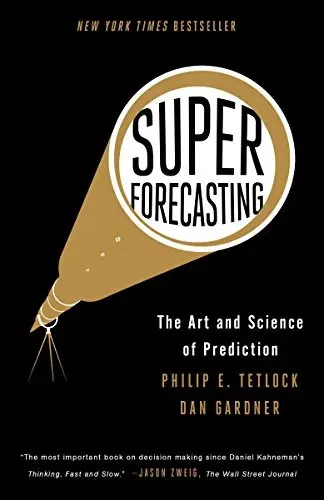
Reviewers keep pointing to the same predecessors: this ground was already covered by Kahneman’s Thinking, Fast and Slow and Tetlock’s Superforecasting, and more than one says “This book should have been a tweetstorm.” Another calls it “an insightful 30-page idea in a 230-page package,” the central point about separating decision quality from outcome served again and again in a new anecdote wrapper rather than developed further. Readers with football knowledge push back hard on the framing example itself, arguing the stats-only reading of the goal-line call ignores situational factors a coach would actually weigh. The business-world material reads thin next to the poker chapters, and one reader calls the whole thing “a very shallow literature review of behavioral economics.” A meaningful share of the stated page count turns out to be endnotes and citations once you get there.
The case for it and the rest of the canon open with Pro.