The Last Book Shelf
Download

The Other Self

"Who is the stranger living inside you, and what happens when you finally meet?"

Augustine said it first: "I command myself and am not obeyed." From there the self keeps coming apart. Shelley's creature and Wilde's portrait are the disowned half walking around in daylight; Dostoevsky's underground man turns the war inward, talking himself in circles he can't escape. Freud goes digging for where it all comes from, Hesse shatters one man into a hundred quarreling tenants of the Magic Theatre, and Nabokov and Priest close the run with two doubles who lose track of where the performance ends and the person starts.

8 books~27 weeksDemanding
1
The Confessions
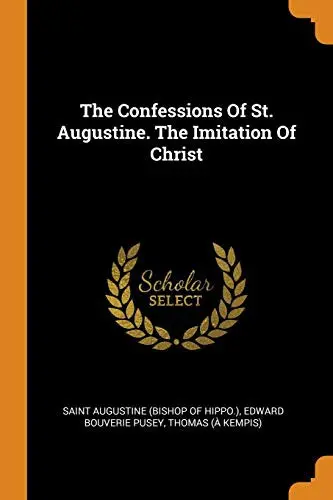
The Confessions
Saint Augustine · c. 400 CE

The first great autobiography in Western literature, and the first to use the form as an examination of consciousness rather than a record of deeds. Augustine's account of his restless seeking, his sins, his conversion, and his discovery of God contains psychological self-analysis that would not be surpassed until Freud.

2
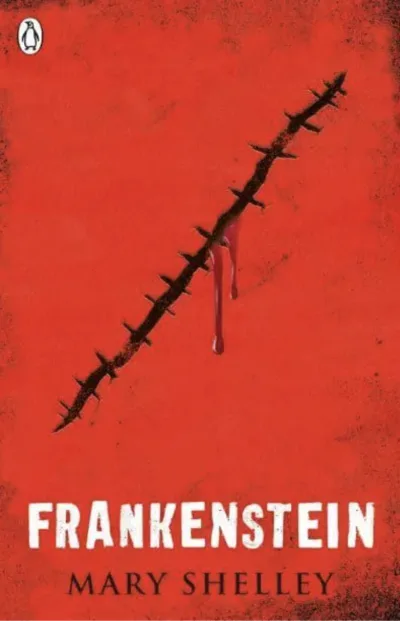
Frankenstein
Frankenstein
Mary Wollstonecraft Shelley · 1818

The first science fiction novel, and still among the most morally powerful. Shelley's creature doubles as the first SF robot, the first AI, and the first exploration of scientific hubris. She wrote it at nineteen.

3
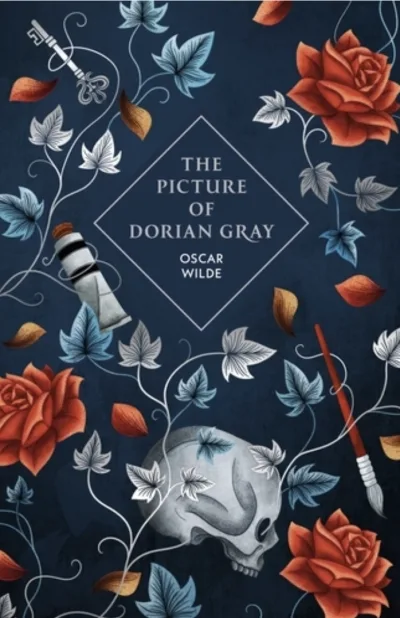
The Picture of Dorian Gray
Oscar Wilde · 1890

Wilde's only novel, and unlike anything else in Victorian literature. Decadent, philosophical, the corruption of beauty made literal. Its preface is a manifesto for art for art's sake. Underneath the aestheticism is a genuinely frightening morality tale about vanity, influence, and the soul.

4
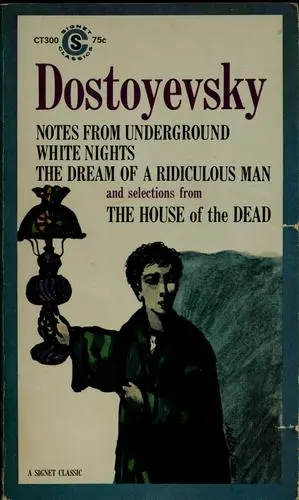
Notes from Underground
Fyodor Dostoyevsky · 1864

The angry monologue that launched existentialism. Dostoyevsky's Underground Man — bitter, self-aware, paralyzed by consciousness — rejects every rational system that promises happiness. Written as a rebuttal to utopian socialism, it became the template for every unreliable narrator and anti-hero who followed.

5
The Interpretation of Dreams
Sigmund Freud · 1899

The book that launched psychoanalysis, and with it, the entire 20th century's fascination with the unconscious, repression, wish-fulfillment, and the interpretability of interior life. Even if Freud's specific dream theories are wrong, the map of the mind he drew changed how humans understand themselves.

6
Steppenwolf
Steppenwolf
Hermann Hesse · 1927

Harry Haller's division between the human and the wolf, between civilization and instinct, is Hesse's most psychologically acute portrait. Published in 1927, dismissed by critics, loved by readers for a century. Every alienated young intellectual discovers it and recognizes themselves. Its emotional intelligence is real, whatever the academics say.

7
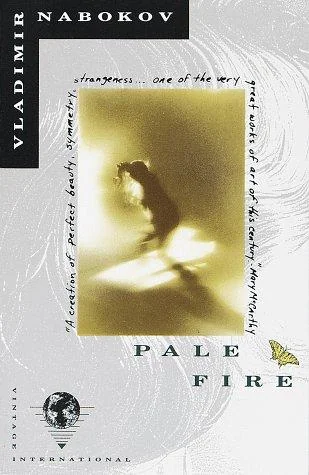
Pale Fire
Pale Fire
Vladimir Nabokov · 1962

A 999-line poem with footnotes by an increasingly unreliable annotator. The form is the whole point: the actual narrative is buried in the editor's commentary, where Charles Kinbote may or may not be the deposed king of Zembla and may or may not be insane. The most playful experiment in 20th-century fiction. Reread three times and you still will not know what happened.

8
The Prestige
The Prestige
Christopher Priest · 1995

Two Victorian stage magicians conduct a feud across decades. The plot turns on a real scientific mystery (Tesla's wireless electricity) and the nature of sacrifice. Priest wrote both the best Victorian fantasy and the best novel about the cost of obsession.

Unlock Reading Paths
This feature is available with Last Book Shelf Pro
Back to Home