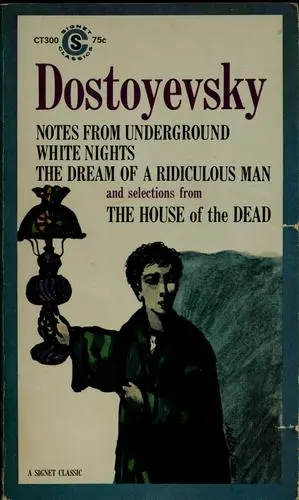
Notes from Underground
The angry monologue that launched existentialism. Bitter, self-aware, paralyzed by consciousness, Dostoyevsky's Underground Man rejects every rational system that promises happiness. Written as a rebuttal to utopian socialism, it became the template for every unreliable narrator and anti-hero who followed.
Forty-some pages pass before Part 2 gives you a scene, and Part 1's monologue-before-plot structure is a real stall point, dense and repetitive with nothing to hold onto. Part 2's turn toward intimacy draws its own sharper complaint: the narrator's instinct is “subjugating the other” rather than connecting with her. Critics have long argued whether the book earns its reputation or whether disgust gets mistaken for being moved, Nabokov among the skeptics; one reviewer calls the whole thing “thrills of disgust, morbid interest” rather than genuine catharsis. Translation adds its own friction: the standard Garnett version gets faulted as “too demure and Victorian,” smoothing out the ironic, broken syntax that makes the original bite.
The case for it and the rest of the canon open with Pro.