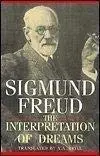
The Interpretation of Dreams
The book that launched psychoanalysis, and with it, the entire 20th century's fascination with the unconscious, repression, wish-fulfillment, and the interpretability of interior life. Even if Freud's specific dream theories are wrong, the map of the mind he drew changed how humans understand themselves.
The wish-fulfilment thesis cannot be disproved, and readers say so plainly: “of course this is very un-scientific.” The sample is Freud's own dreams and patients he calls neurotics, a limit he admits and never corrects for; “freud's not very good at structuring an argument,” and the whole is “long-winded, repetitive, and poorly organized.” The first hundred pages surveying earlier literature is a slog, one reader having “capitulated at page 500, a painful decision.” Once the method runs past his own dreams it curdles into a joke: “Hat? = Penis. Smooth walls? = Penis. Airplanes? = Penis.” Readers note “Freud basically concludes that all of your dreams are about sex,” and catch him “casually being like ‘but yeah I was high on coke'.” One critic: “it goes on too long, like a dream about going to the DMV to renew your license.”
The case for it and the rest of the canon open with Pro.