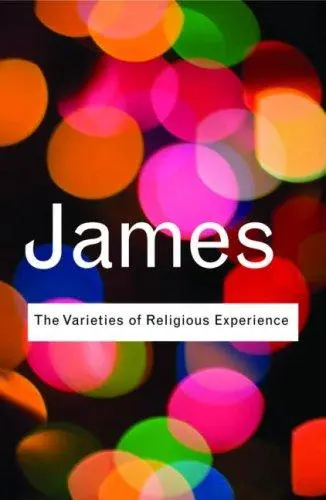
The Varieties of Religious Experience
James, the founder of pragmatism and a brilliant psychologist, turned the same empirical tools used on nature toward the study of religious experience: mysticism, conversion, saintliness, sick souls and healthy minds. He concluded that religious experience is real in its effects, regardless of its ultimate truth. The most open-minded, rigorous book ever written about faith.
“He just won't cut anything,” piling quotation on quotation into “a mass of case studies,” with footnotes running pages of untranslated text; one reader rates the ordeal “worse than Infinite Jest.” The science is a period piece: no experiments, no statistics, handpicked cases, and “when you cherry-pick your data this way, you can prove anything.” He studies only the extremes, which skews any conclusion about ordinary religious feeling. It is a Protestant document wearing a universalist label, “of its time, 1902... designed mostly to confirm... monotheistic, modern, forms.” For readers who want empirical grounding “too many things are wrong,” and “for others it's a waste of time.”
The case for it and the rest of the canon open with Pro.