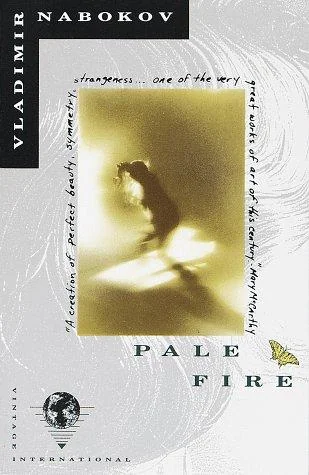
Pale Fire
Vladimir Nabokov · 1962
A 999-line poem with footnotes by an increasingly unreliable annotator. The form is the whole point: the actual narrative is buried in the editor's commentary, where Charles Kinbote may or may not be the deposed king of Zembla and may or may not be insane. The most playful experiment in 20th-century fiction. Reread three times and you still will not know what happened.
Literary Fiction · the Pro canon
The case for it and the rest of the canon open with Pro.
if this one calls to you, so will these →