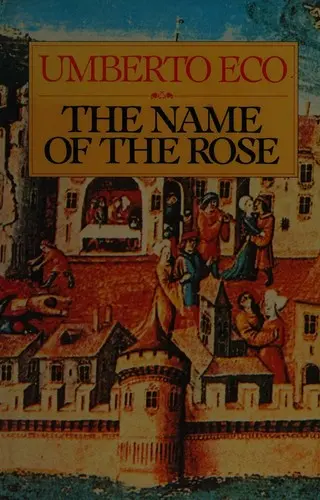
The Name of the Rose
Decide its fate
The record
Time
An eveningA season518 pages, about 10 hours: the length of 1.6 typical books on the shelf.
Getting in
Walk right inSteep climbSeven readers report stalling in the opening, one stopping at page 73 of 518.
What it gives
Plot and actionIdeas to live byIn 15 reviews from critics and book blogs, 10 credit the plot and 12 credit the ideas or a change in how they live.
One of a kind
Others do thisNothing else doesOne reviewer compares its library and hidden books to Borges, whose Labyrinths, on the shelf at 256 pages, covers similar ground more briefly.
The case for it
on William of Baskerville
“Your hero, William of Baskerville, is a brilliantly deductive English monk.”
Gareth Rubin · Five Books, 2025 on the library
“the sort of library filled with knowledge and these games, which teased you”
Vanora Bennett · Five Books, 2010 on William and Adso
“a dialogue between mentor and student, couched in a multiple-murder mystery at a monastery”
four stars · a book blog on the abbey
“The imagination that went in to creating the abbey, especially the Aedificium and its library”
a book blog
The case against
on the untranslated Latin
“Page after page of this. Grrr.”
a book blog on the first chapters
“Reading the first four hundred pages or so can be frustrating and confusing.”
a book blog on the library maze
“feels a bit more of a stifling quagmire than an arresting labyrinth”
a book blog on the digressions
“took up huge portions, about two-thirds, of the book”
a book blog