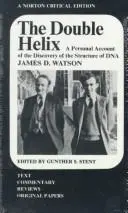
The Double Helix
Watson's astonishingly candid account of discovering DNA's structure reads like a thriller: competitive, gossipy, occasionally maddening in its treatment of Rosalind Franklin, but electrifying in its portrait of science as a human, hungry, imperfect enterprise. No other book captures the actual texture of doing science at its highest pitch.
Franklin is the reckoning the book ducks. Watson calls her Rosy throughout, notes when she “did something novel with her hair” rather than what she knew, and the whole reads to modern readers as “gossip, backstabbing, petty squabbles, arrogance, snobbishness, and misogyny.” He and Crick saw her unpublished X-ray data without her knowledge, and the book glosses it. It is also thin on the actual science, readers “skimming this... how cold he was in Italy” instead of the structure, the descriptions elsewhere “somewhat colorless... skin-deep.” The closing epilogue conceding her contribution is “too little, too late,” and one reader assigned it in school reports “I've never forgiven that teacher.”
The case for it and the rest of the canon open with Pro.