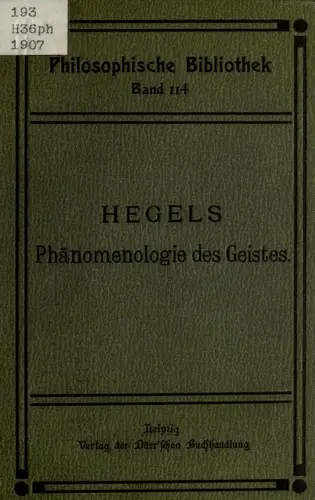
Phenomenology of Spirit
Decide its fate
The record
Time
An eveningA season595 pages, about 12 hours: the length of 1.9 typical books on the shelf.
Getting in
Walk right inSteep climbOne reader quit a fifth of the way in, and a reading guide names the Preface as where buyers stall.
What it gives
Plot and actionIdeas to live byIn 11 reviews from critics and book blogs, none credit the plot and 7 credit the ideas or a change in how they live.
One of a kind
Others do thisNothing else doesA critic ranks it with Kant’s Critique of Pure Reason and Heidegger’s Being and Time, the latter on the shelf at 656 pages.
The case for it
on Hegel’s method
“grasping Hegel requires letting go of the need to grasp Hegel”
a Substack review on Pinkard’s translation
“Pinkard provides a leaner, fresher and more flowing version”
Meade McCloughan · Marx and Philosophy Review of Books, 2018 on the Preface and Introduction
“The commentary on the Preface and Introduction is especially worthwhile.”
Fred Rush · Notre Dame Philosophical Reviews, 2018 on the master-slave dialectic
“foundational to phenomenology, marxism, existentialism, continental feminist work, critical race theory, and psychoanalysis”
a Substack review
The case against
on the phrenology section
“a long, tedious section on phrenology”
a book blog on Hegel’s terminology
“makes up new terminology and starts using them”
a book blog on Miller’s translation
“occasionally smooths Hegel into an Edwardian English that makes a hard passage sound merely stately”
a book blog on Absolute Knowing
“the infamous and opaque if not impenetrable rushed and perhaps unfinished final chapter”
a book blog