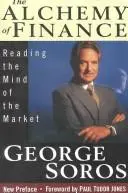
The Alchemy of Finance
Soros introduces reflexivity: market participants' biased perceptions actually change the fundamentals they're evaluating, creating feedback loops that traditional economics can't explain. This directly contradicts efficient market theory and explains why bubbles and crashes are inherent features of markets, not anomalies. Dense and demanding, but one of the deepest ideas in finance.
The prose gets called dense and academic across many reviews, and reviewers note that most people they know who bought the book never finished it. The bigger complaint is that reflexivity never turns into a method: one reader says flatly the book “doesn't tell you how to do squat,” and another reports it “Contains no actionable insights for me.” A critic frames the same gap more formally, calling the framework “too vague and difficult to apply in practice.” Part One, the theoretical setup, reads as a slog next to Part Three's live trading diary, and some reviewers advise skipping straight there. The diary itself has dated badly too, tied to 1985-86 market conditions that don't map onto anything current. Critics also warn it off beginners outright, calling it “not recommended as anyone's first finance book.”
The case for it and the rest of the canon open with Pro.