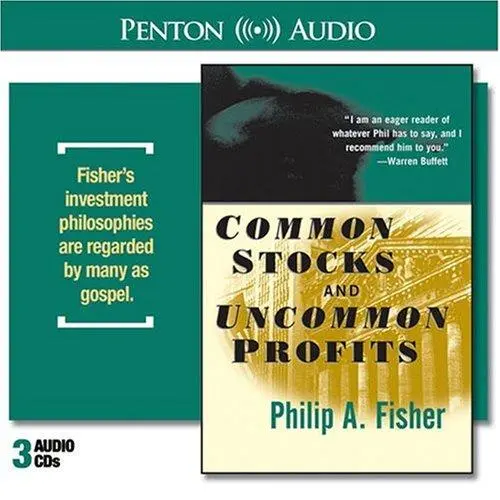
Common Stocks and Uncommon Profits
Fisher's 'scuttlebutt' method (learning about a company by talking to customers, suppliers, competitors, and former employees) defined qualitative analysis. His 15-point checklist for evaluating a growth company remains one of the best ever created. Buffett says he's '85% Graham and 15% Fisher,' but that 15% is what turned him from a cigar-butt picker into a great-company buyer.
Datedness draws the sharpest fire: reviewers call it “bland, obvious and somewhat outdated,” generic wisdom that decades of later investing books have already absorbed and repeated. The prose itself draws criticism too, tangled and passive enough that critics say the same content could run a fraction of the length. A specific and recurring objection targets Fisher’s era-bound attitudes, with one reader flagging “casual racism, chauvinism, and not being up to date,” and noting the scuttlebutt networking advice assumes an old-boy network few ordinary investors have access to. Others push back on the whole method as unfalsifiable, arguing “very little of what is presented is verifiable or backed up” against a real balance sheet. A critic sums up the book’s age problem more gently: “some methods are outdated,” even if the underlying judgment calls on people and product still get cited approvingly.
The case for it and the rest of the canon open with Pro.