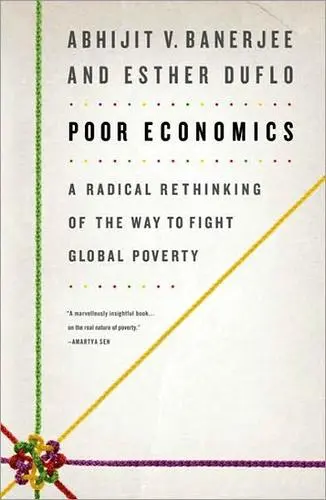
Poor Economics
Nobel laureates use randomized controlled trials to study economic behavior in poverty. Their findings challenge conventional wisdom about rationality, development, and decision-making. The critical insight for investors: economic behavior is not universal. Your framework is local, not global. The poor aren't irrational — they're making sophisticated decisions under constraints most investors have never experienced.
The subtitle promises a radical rethinking of how to fight poverty, but skeptical readers say the content amounts to incremental program tweaks rather than any structural rethinking, and one puts it bluntly: “fighting poverty is just about little tweaks.” Several say the headline lessons aren't new, reading as repackaged public-health common sense, and one reviewer dismisses a whole chapter as “This sounds like basic public health.” A structural problem follows from the method itself: the randomized trials are drawn entirely from poor countries, so a reader can't learn what separates rich countries from poor ones. One critic punctures the modest project bluntly: “the poor did not need to be the hedge-fund managers.” A minority of readers push further, faulting the book for stopping short of political economy and power, calling it “Development without even thinking of challenging the status quo.”
The case for it and the rest of the canon open with Pro.