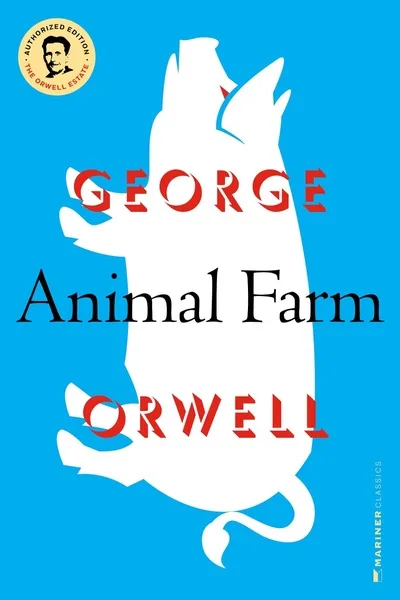
Animal Farm
Decide its fate
The record
Time
An eveningA season128 pages, about 3 hours: half the length of a typical book on the shelf.
Getting in
Walk right inSteep climbMr. Jones fails to secure the farm, and Old Major calls the animals together to share his dream of rebellion.
What it gives
Plot and actionIdeas to live byIn 14 reviews from critics and book blogs, 3 credit the plot and 13 credit the ideas or a change in how they live.
One of a kind
Others do thisNothing else doesOrwell’s own 1984 is the book three reviewers set it against, and they split on which is stronger.
The case for it
on the length
“Animal Farm packs more punch in 100 pages than most books manage in 500.”
five stars · a book blog on the characters
“The characters were interesting, and I loved the atmosphere and writing style.”
five stars · a book blog on the opening chapters
“I devoured the first six chapters in an hour or so.”
a book blog on Boxer’s motto
“I really connected with the workhorse Boxer and his motto”
a book blog
The case against
on the allegory
“The allegory turned out to be a creaking machine for saying in a clumsy way”
George Soule · The New Republic, 1946 on the animals’ portrayal
“In fact, about 70% of the book consists of nothing but such depictions.”
Jones Manoel · redsails.org, 2022 on the talking-animal gimmick
“an off-brand 1984 with fewer layers, more obvious themes, and a gimmick with talking animals”
a book blog on Sugarcandy Mountain
“a pretty blatant caricature of traditional religion through the silly fable of ‘sugarcandy mountain.’”
a Substack review