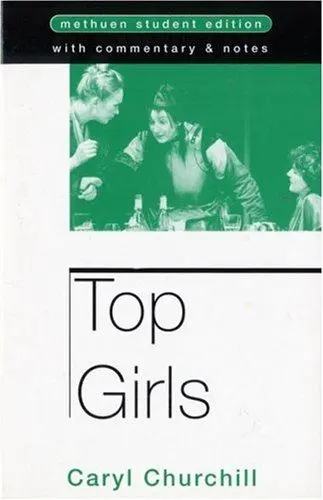
Top Girls
Marlene, a Thatcher-era career woman, hosts a dinner party with famous women from history and legend. Then Churchill pulls the rug out and shows what Marlene left behind. The first act is a dazzling theatrical conceit; the last act is a gutting family drama. Churchill asked whether female success under capitalism was anything more than women learning to behave like the worst men.
Act One is written to be spoken simultaneously, marked in the text with slashes where characters talk over each other, and it's the most common complaint from readers: one called that opening “almost unreadable for me,” another flatly “bloody difficult enough to read in 2019.” The large doubled cast compounds it; one reader was left with “just one word comes to mind; huh?” by the end, and another found a “ton of different characters” whose importance “isn't super clear” without having seen a staged version. Without outside context on Thatcher-era workplace politics and class, the second half can read as dated rather than sharp. Some reviewers say the play raises its feminism-versus-class question without resolving it, leaving them frustrated rather than provoked by the open ending, and a few finish unsure what the structure was doing.
The case for it and the rest of the canon open with Pro.