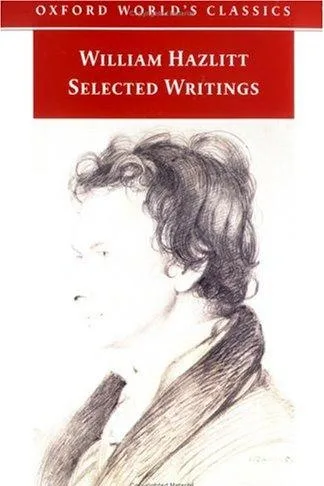
Selected Writings
Hazlitt bridges the Romantics and the moderns: ferocious, opinionated, the first critic to write about theater, painting, and boxing with equal authority. His essay "On the Pleasure of Hating" is proto-Nietzsche. The original angry young man of English letters.
The abstract philosophy and doctrine essays are where even Hazlitt’s admirers say to brace themselves; the same readers who love the reportage and criticism go flat or irritated once he shifts into pure argument. The political writing draws the sharpest hostility of anything in the book, one reader dismissing it as “the cheap rhetoric of the ochlagogue”, all showmanship aimed at dazzle rather than substance. His defense of Robespierre’s and Napoleon’s worst acts as justified by revolutionary ends reads as a real moral blind spot dressed in elaborate prose. Paragraphs run a full page without a clear throughline, and one reader sums it up bluntly: “His paragraphs are big and they don’t contain his thoughts.” Another reader, mid-essay, decided “I suspect I should have read Charles Lamb instead”.
The case for it and the rest of the canon open with Pro.