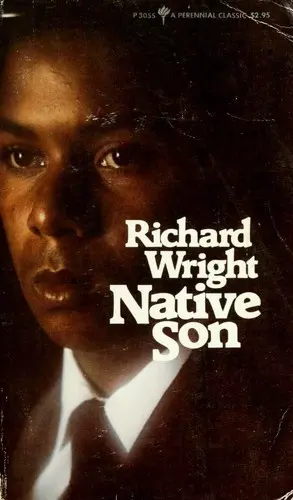
Native Son
Bigger Thomas shook white liberal America into confronting the rage produced by racism. Wright published it in 1940 and refused to let readers sympathize from a safe distance; the novel is deliberately brutal. Baldwin later criticized it, but that critical conversation is itself part of the canon.
Part three is a trial, and the momentum dies at the courtroom door: "the magic of parts I and II disappears," replaced by "lengthy speeches delivered by a racist prosecutor" and a defense summation readers call a political tract stapled to a novel. "Seems like a purgatory teeming with bo-oh-ring soliloquies and lawyer sways," writes one. Bigger's interior monologue repeats the same social-blame beats without deepening, and readers ask the question the book invites: "Am I actually supposed to be rooting for him?" The two women tied to his crimes exist as plot devices, the poorer Black woman worst served. Baldwin's objection still splits readers, including Black readers, today.
The case for it and the rest of the canon open with Pro.