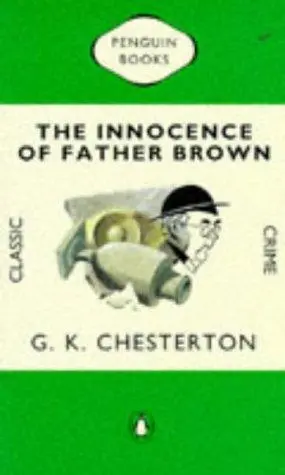
The Innocence of Father Brown
Decide its fate
The record
Time
An eveningA season294 pages, about 6 hours: about the length of a typical book on the shelf.
Getting in
Walk right inSteep climbTwo readers report stalling in the opening stories: one never finished ‘The Blue Cross’ for years, another stopped after four of twelve.
One of a kind
Others do thisNothing else doesA reviewer ranks Chesterton below Arthur Conan Doyle’s Holmes and Agatha Christie’s Poirot, both on the shelf.
The case for it
on the descriptions
“Chesterton uses such marvelous descriptions of place and weather and people”
three stars · a book blog on Father Brown’s method
“the detection method of Father Brown is very humanistic”
a book blog on the short stories
“I liked how I could pick up and put down this book”
a book blog on Father Brown
“He also has Father Brown getting a little playful, gently enjoyable.”
a Substack review
The case against
on atheists and Jews
“sanctimonious sneering reserved especially for atheists and Jews”
one star · a book blog on fair play
“it cannot be said that the notion of ‘fairplay’ has actually yet fully formed”
a book blog on Chesterton’s rhetorical tics
“Chesterton has some rhetorical tics of which I have long since tired”
a Substack review on the characters
“Outside of Brown and his friend Flambeau, most of the characters remain flat.”
a book blog