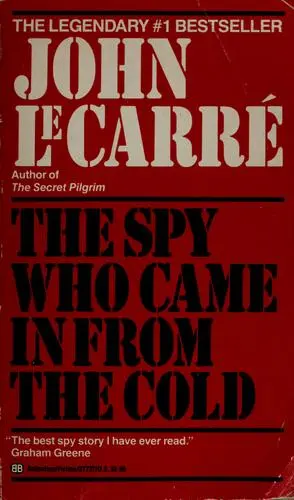
The Spy Who Came In from the Cold
Decide its fate
The record
Time
An eveningA season247 pages, about 5 hours: three-quarters the length of a typical book on the shelf.
Getting in
Walk right inSteep climbTwo readers report quitting in the opening chapters, when Leamas loses his job and takes work shelving books in a library.
What it gives
Plot and actionIdeas to live byIn 12 reviews from critics and book blogs, 7 credit the plot and 9 credit the ideas or a change in how they live.
One of a kind
Others do thisNothing else doesMike Finn pairs it with Len Deighton’s The Ipcress File, on the shelf at 223 pages, as the other book that ended Bond glamour.
The case for it
on the Fleming contrast
“a fine contrast to flamboyant Mr. Fleming”
Unsigned review · Kirkus Reviews, 1963 on the minor characters
“The scene setting was masterful, and even the minor characters left such an impact.”
a book blog on the pace
“I read this book in one sitting”
a book blog on the plot
“fiendishly clever both in its content and its exposition.”
a book blog
The case against
on the opening chapters
“the hero spends more time working in a library and picking fights with local grocers”
a book blog on the romance
“wasn’t too sure if they bought the romance of the mission.”
a Substack review on the prose style
“It is not as beautiful as Alistair MacLean’s gorgeous prose.”
a book blog on the chronology
“the chronology of the novel makes absolutely no sense.”
a book blog