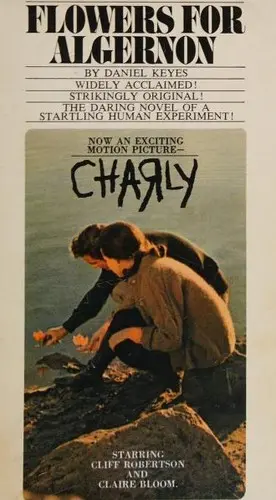
Flowers for Algernon
Charlie Gordon's diary records his transformation from intellectual disability to genius, told in prose that shifts with his capacity. Formally perfect. Emotionally direct. The SF novel of the 1960s least likely to leave you unmoved.
The 1966 novel is an expansion of a 1959 novella, and readers prefer it short, with a critic blaming the added “Freudian psychoses and Hollywooden scenes” for diluting something that worked better. The three main women are period stereotypes, tagged “The Cruel Mother, The Whore, and The Angel,” with the psychology behind them called smug. The vocabulary for intellectual disability was standard then and reads as offensive now, enough that some will not recommend it without a note. And the middle is “dragging, convoluted and over repetitive” between a strong opening and close.
The case for it and the rest of the canon open with Pro.