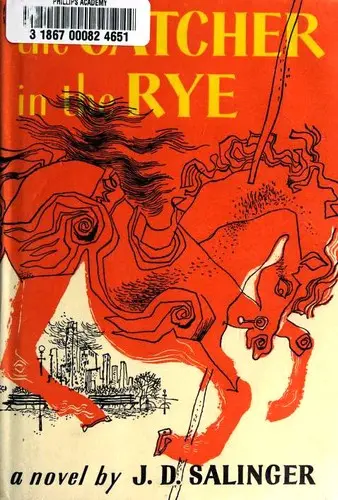
The Catcher in the Rye
Decide its fate
The record
Time
An eveningA season240 pages, about 5 hours: three-quarters the length of a typical book on the shelf.
Getting in
Walk right inSteep climbOne reader needed the first couple of pages to adjust to Holden’s voice before it clicked.
What it gives
Plot and actionIdeas to live byIn 17 reviews from critics and book blogs, one credits the plot and 6 credit the ideas or a change in how they live.
One of a kind
Others do thisNothing else doesOne critic rates Salinger’s own Nine Stories, on the shelf at 198 pages, above Catcher.
The case for it
on growing up
“its picture of the old hells of young boys”
Kirkus Reviews, 1951 on the narrator
“Holden Caulfield, the main character who tells his own story, is an extraordinary portrait”
Anne L. Goodman · The New Republic, 1951 on calling out phonies
“I was mesmerized by protagonist Holden Caulfield’s angst and his criticism of superficiality in society.”
a Substack review on New York City
“The city is beautiful and terrible, in all its neon loneliness and seedy glamour”
a Substack review
The case against
on the length
“This book though, it’s too long. Gets kind of monotonous.”
James Stern · The New York Times, 1951 on Holden’s personality
“Holden’s character is also, quite frankly, irritating, and I did find myself cringing at times”
five stars · a book blog on the Central Park ducks
“Holden’s facile riddle about where the ducks in Central Park go during the winter”
a book blog on his limited vocabulary
“his limited vocabulary starts to get annoying fast.”
a book blog