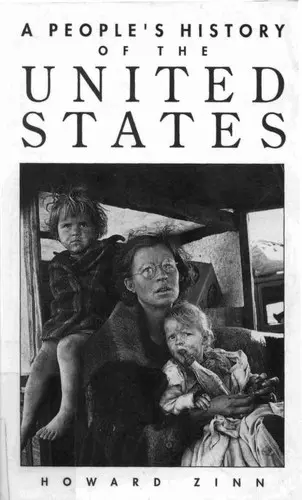
A People's History of the United States
Zinn's radical retelling of American history from the perspective of the colonized, the enslaved, the working class, and the dissidents challenged the triumphalist narrative taught in schools and sold over two million copies. Whatever your politics, it permanently altered how American history is taught and discussed.
The serious charge is advocacy dressed as history, “closer to propaganda than history,” “absolutely atrocious agit-prop.” Readers who check the sources find omissions that cut against the argument: his claim about Black draft resistance comes from a book that also shows Black registrants underrepresented among evaders. His claim that Japan was ready to surrender rests on a single cable whose rebuttals he never engages. The structure reads as “hasty cut-and-paste jobs, jumping from topic to topic,” and even a defender concedes it is “a Marxist Companion to American history,” “not a coherent version of American history, just a companion to one,” where “the true heroes of history are the uninvolved thinker.” A critic's summary: “instead of negating the one-sided histories he detests, Zinn has merely reversed the image.” A poll of six hundred historians rated it the “second least credible history book in print.”
The case for it and the rest of the canon open with Pro.