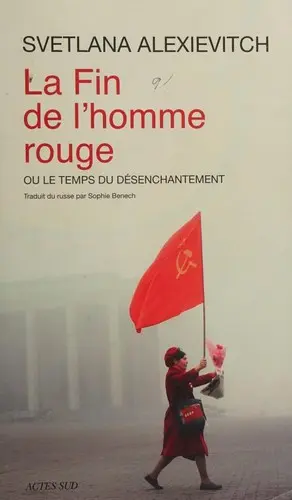
Secondhand Time: The Last of the Soviets
Alexievich's oral history of the post-Soviet collapse collects hundreds of voices from people who watched one world end and got nothing recognizable in return. The Nobel committee gave her the literature prize in 2015 for what they called "a monument to suffering and courage in our time." No single author could have invented these testimonies; they had to be listened for.
Readers describe hitting a wall around a hundred pages in, after which similarly shaped griefs blur: “I became numb to the stories.” Critics call it “baggy and repetitive,” and readers agree “there was simply too much of it, it's nearly 700 pages long,” recommending it as “the sort of book better read as a side read.” The testimonies are undated with little biographical anchoring, so no voice can be placed in time or checked. The heaviest charge is that Alexievich shapes the monologues for literary effect, a critic concluding the result “falls short as both fact and art,” with precedent: veterans sued over her earlier oral history, accusing her of “distorting and falsifying” what they told her.
The case for it and the rest of the canon open with Pro.