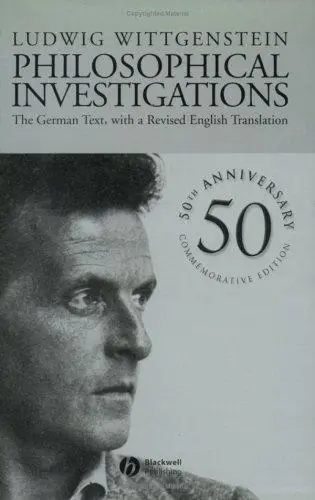
Philosophical Investigations
Decide its fate
The record
Time
An eveningA season329 pages, about 7 hours: about the length of a typical book on the shelf.
Getting in
Walk right inSteep climbAugustine’s account of learning words comes first, then a builder calling for a slab.
What it gives
Plot and actionIdeas to live byIn 12 reviews from critics and book blogs, 3 credit the plot and 11 credit the ideas or a change in how they live.
One of a kind
Others do thisNothing else doesThree writers read it against Wittgenstein’s earlier Tractatus, and Peter Hacker calls the two diametrically opposed philosophies.
The case for it
on the duck-rabbit
“Wittgenstein uses perhaps the funiest example in all of philosophy, the duck-rabbit”
five stars · a book blog on the idea of language-games
“one of the greatest advances in understanding the nature of human languages”
Peter Hacker · Five Books, 2018 on the preface
“a book written under the shadow of the destruction of a world”
a Substack review on his mistakes
“so intense, so pure, so self-critical that even its mistakes are gifts”
Daniel Dennett · TIME, 1999
The case against
on the structure
“the book is incredibly challenging due to the lack of structure”
a book blog on his style
“his style of writing can be a little too indirect”
Nigel Warburton · Five Books, 2021 on the ambiguity
“The ambiguity of what he writes about has scared me from treating him seriously.”
a philosophy forum on the remarks
“some of the remarks I didn’t understand at all!”
a philosophy forum