— Philosophy —
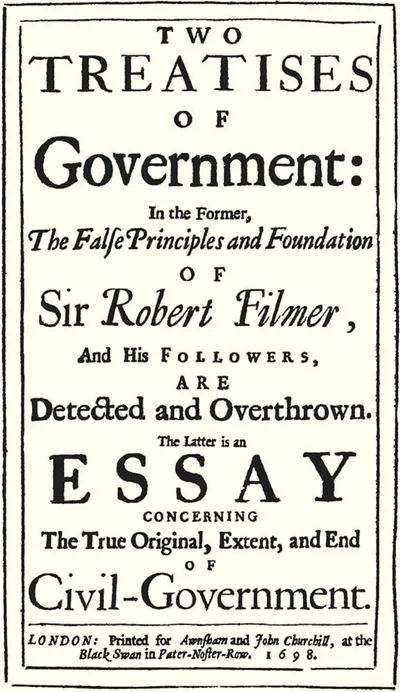
Two Treatises of Government
John Locke
— 1689 —
“
Natural rights, consent of the governed, the right to revolution.
Decide its fate
⚖The case for it
Skip to the Second Treatise. Readers do it routinely, syllabi do it too, and several report staying “up till 2 am to finish” once the argument gets moving. Government by consent, and the right to remove one that breaks its trust, reads like “an unmistakable revolution in political thought” rather than the safe civics it has been flattened into. The property chapter, where labor mixed with land creates ownership, is what one reader calls “the real juice,” the single most consequential argument here and still cited in live debates. Tracing the line from these pages into the American founding documents yourself is the payoff readers name.
— the honest librarian
✕The case against
The First Treatise is a line-by-line demolition of Robert Filmer, a pamphleteer nobody has read in three centuries, what one reader calls “your standard political philosophical diss track,” and it costs you a hundred pages before the real book starts. Locke makes each point roughly a dozen times. Critics note that “the spoilage limit conveniently disappears once money enters,” the ownership cap dissolving exactly when it would matter most, and call it the book's central sleight of hand. Tacit consent asks you to treat not emigrating as agreement, a move one reviewer says “does not stand up to serious scrutiny.” His positions on slavery and on Native land are raised as contradictions, not footnotes.
— the honest librarian
3h
honest hours
4
sittings
beyond the verdict
if you loved this, read these →