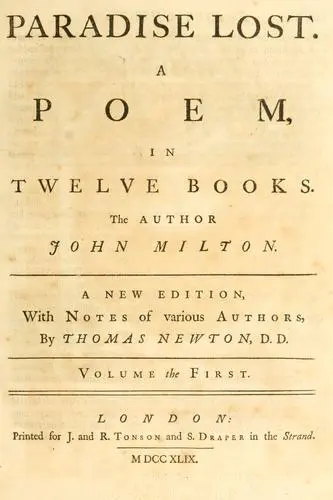
Paradise Lost
The last and greatest of the classical epics in English. Milton set out to "justify the ways of God to men" and instead created the most compelling villain in literature. Satan's speeches are the poetry of rebellion and wounded pride; the Fall itself is rendered with such empathy that Blake famously declared Milton was "of the Devil's party without knowing it." The poem's blank verse shaped English poetry for two centuries.
The syntax is the first wall for most readers: inverted word order, long suspended sentences, and constant classical and Biblical allusion, with even devoted readers admitting “the poetry can be dense and difficult and full of allusions.” The middle books sag badly enough that fans recommend skipping ahead to the Fall itself, and one reader who came for Satan complains “there was not enough Satan” once the story moves into devotional territory and loses interest. The final two books, where an angel compresses the rest of biblical history into a rushed preview, read to several reviewers as a deflating comedown, as if Milton ran out of steam. The collection's most negative take goes further, arguing the handling of Eve reads as straightforward misogyny dressed in classical borrowing, one reader saying flatly “it became very Christian,” a review other commenters remember as “the 50-word review that launched a thousand trolls.”
The case for it and the rest of the canon open with Pro.