Songs of Innocence and of Experience
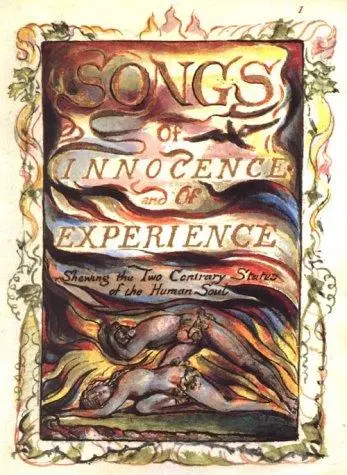
Blake's "two contrary states of the human soul." The first collection shows childhood wonder and divine presence; the second, its systematic corruption by church, state, and industry. "The Tyger" and "The Lamb" work as contrasts. The chimney sweeper poems function as social indictment. "London" stands as the greatest short poem about urban alienation. Blake invented visionary poetry and the critique of industrial capitalism simultaneously, in language that sounds like hymns.
Blake's Songs are pitched as a way into poetry, but not every reader finds the road easy. One well-known review took the form of mocking verse, admitting “his poems can put me to sleep” and joking “to read these again, I would need some gold.” Another reader got through only by “chipping away and picking up different parts” across a week rather than reading straight through, an effortful pace for a book pitched as approachable. Some readers rate the Innocence half thinner than its Experience twin, its craft less impressive next to the poems it's paired with. Buy a plain-text edition and you lose the hand-colored plates Blake designed as half the point, a gap that also tripped up a reader working through the book for a college seminar.
The case for it and the rest of the canon open with Pro.