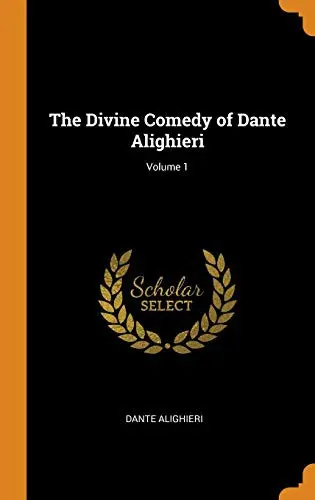
The Divine Comedy
The greatest long poem in the Western tradition after Homer, and arguably the most architecturally perfect. Hell, Purgatory, and Paradise as a cosmological journey through which Dante maps the entire moral universe of medieval Christianity. The Inferno (with its psychological precision in imagining torments fitted perfectly to sins) has never been equaled as a work of moral imagination. T.S. Eliot put it plainly: "Dante and Shakespeare divide the modern world between them; there is no third."
Paradiso is the canticle readers resent most, its abstract theology and cosmology striking more than one reviewer as an acid trip; Purgatorio fares little better for some, with one reader calling it “a purgatory to read through” in its own right. Translation is the real fault line: a stiff or unrhymed version turns the same poem punishing, and one reader complains flatly that “language felt ugly and ordinary,” while another found Dante's satire “not as funny as one might assume.” The density of thirteenth and fourteenth century Florentine political references is a genuine barrier without heavy footnoting, and readers fault Dante's own placement logic as inconsistent from circle to circle. A vocal minority reject Mary Jo Bang's colloquial Inferno translation outright, and a critic sides with them, arguing “Dante is not transcribing a folk ballad.”
The case for it and the rest of the canon open with Pro.