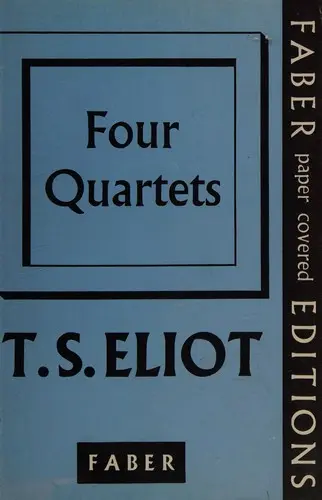
Four Quartets
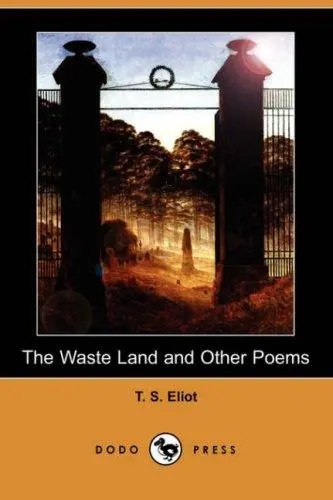
Eliot's late masterwork and his greatest sustained achievement: four meditations on time, place, memory, and salvation structured as music (thematic development, variation, recapitulation). Where The Waste Land is despair, Four Quartets is something harder to name: acceptance tinged with terror. "Little Gidding" ends with "And all shall be well and / All manner of thing shall be well." The most religious and the most honest of his major poems.
George Orwell's old objection still sets the terms of the complaint: that Eliot merely assents to belief on the page rather than dramatizing a real struggle with it, leaving behind what one critic calls a “note of quiescence, even of bleak resignation.” The Dry Salvages is flagged repeatedly as the weak link, “the least satisfactory of the sequence” and, more bluntly, “a complicated, uneven, and rather prosy poem.” E. M. Forster complained the suffering here feels sanctioned rather than felt, as if faith had been “endorsed by the schoolmaster and sanctified by the priest,” and critics who preferred The Waste Land's fragmentation read the newly devout Eliot as having lost his nervous energy; one simply notes “something has departed.” The poems also lean on mystics readers likely won't already know, Julian of Norwich among them.
The case for it and the rest of the canon open with Pro.