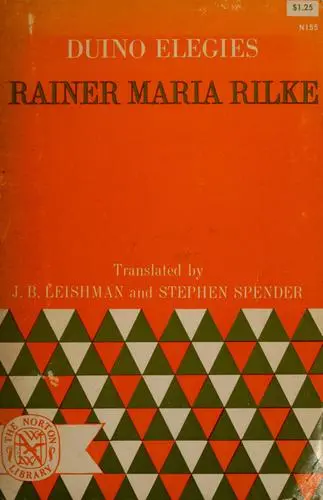
Duino Elegies / Sonnets to Orpheus
The twin summits of German-language modernist poetry. The Elegies grapple with angels, mortality, and "the Open" (existence beyond human consciousness); the Sonnets transform Orpheus into the figure for poetry itself. Written in a two-week creative surge after a decade of silence, the Sonnets emerged simultaneously with the Elegies' completion. Together they constitute the greatest single contribution to European lyric poetry in the 20th century.
The elegies split readers by translation before they split on content: one reviewer flatly says an older rendering “made Rilke's verses more arcane and inaccessible than necessary,” and more than one calls the sequence “absolutely necessary to read with annotations.” The Fifth Elegy is where the thread snaps for readers who otherwise finish the book; one writes plainly, “Fifth Elegy is impossible to understand.” Others push the opposite complaint, saying heavy footnoting props up poems that should stand alone, and a reader sums up the whole approach as “most abstract and full of symbolism.” Even fans who loved individual poems admit the ten elegies never cohere into one sustained argument, and detractors read the difficulty itself as Rilke hiding behind obscurity: “Rilke is willfully obscure.”
The case for it and the rest of the canon open with Pro.