Collected Poems
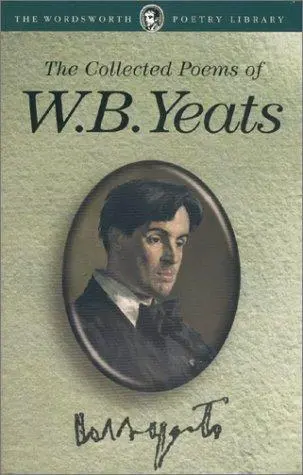
Yeats is the indispensable bridge between Romanticism and Modernism, his early Celtic twilight giving way to the hard, bitter, visionary poetry of The Tower and The Winding Stair. "The Second Coming," "Leda and the Swan," "Sailing to Byzantium," "Among School Children": they sound unlike each other and unlike anything else. His "gyre" cosmology (elaborated in A Vision) is mystical nonsense that generated magnificent poetry. Nobel Prize 1923.
Plenty of readers skip straight to the famous dozen and leave the rest alone; one flat verdict calls the whole collection “some good poems, but overall more misses than hits.” The private mysticism and occult symbolism in the gyre poems is the most common wall, and one reader admits she does “not enjoy his more mystical works” even after trying. The long narrative and dramatic poems at the back get bypassed too, with one reviewer noting she “skipped the narrative and dramatic portion” outright. Yeats's politics color the reading for some: one reviewer reports “his fascist and anti-Semitic beliefs started to surface” partway through and soured what followed. A rarer complaint rejects the craft itself, calling it “Most overrated poetry of all time.” Assigned whole for a class, the 544 pages can take the better part of a year.
The case for it and the rest of the canon open with Pro.