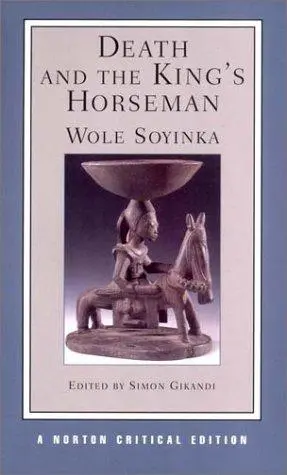
Death and the King's Horseman
Based on a real 1946 event: a Yoruba chief's horseman must follow his king into death, but the British colonial officer intervenes. Soyinka insists the play is not about a clash of cultures but about a metaphysical duty. He won the Nobel in 1986. The play's power comes from taking the Yoruba worldview completely seriously, on its own terms.
Elesin's Act I monologues run dense with ritual riddles, and at least one more reader says the meaning went entirely over their head without notes or outside context, calling the opening “too disconnected, too alienating” before the plot's stakes are even clear. Harsher readers accuse Soyinka of reaching for Shakespeare's register and missing it, pointing to “clichés, short sentences, word repetition, abundant nonsensical metaphors” instead of real poetry. The Pilkings, the British district officer and his wife, draw specific irritation, read as “rather insensitive and foolish” rather than antagonists worth taking seriously, and one review sums up the whole cast bluntly: “There is no one to like.” Even readers who come around admit the text under-delivers alone, needing the music and dance the script keeps gesturing toward before the ritual crisis at its center really lands.
The case for it and the rest of the canon open with Pro.