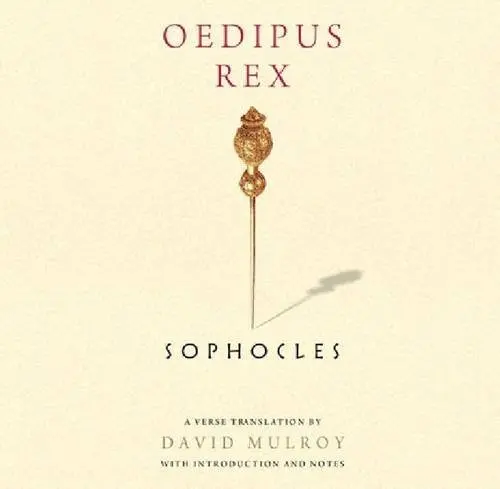
Oedipus Rex
The play that invented dramatic irony. Oedipus hunts for the source of Thebes' plague and discovers he is both detective and criminal. Aristotle used it as the gold standard for tragedy in the Poetics, and twenty-four centuries later nobody has written a tighter plot.
Everything about Oedipus Rex depends on already holding the ending, and skeptical readers experience that dramatic irony as a long walk to a foregone conclusion instead of real tension. One reviewer just asks, “WHAT THE FUCK IS WRONG WITH OEDIPUS,” and does not get much further than that. The violence itself never appears onstage; a messenger reports the blinding and the deaths secondhand, so anyone hoping to watch the action feels shortchanged reading it cold. A critic once described a related staging as “like an insect deliberately flying into a cobweb,” which is exactly the frustration unconvinced readers report: he keeps walking toward a doom nobody made him chase. Assigned-reading fatigue compounds it. Readers forced through it for class turn dismissive, and anyone without notes on Greek convention, the chorus odes, the reported violence, finds the format itself the real barrier before the plot even gets going.
The case for it and the rest of the canon open with Pro.