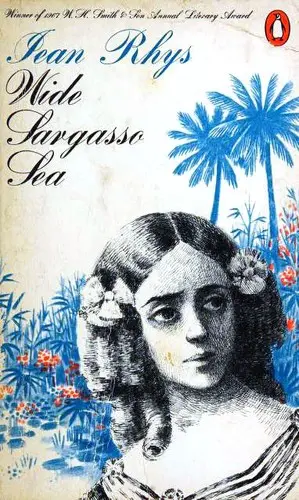
Wide Sargasso Sea
Rhys gave the "madwoman in the attic" from Jane Eyre her name, her history, and her fire. Published in 1966, this postcolonial rewriting of Charlotte Bronte traces Bertha Rochester back to the Caribbean, to a Creole heiress named Antoinette. The result dismantles the original novel's assumptions about race, empire, and who gets to tell the story.
Part One introduces family, servants, and neighbours faster than it names them, and readers say it is “hard to get a handle on who is who” when the dialogue rarely marks who is speaking. Then the narration hands over to the husband with no announcement, so “complete bewilderment is more accurate than disorientation” for anyone who misses the switch. The structural objection outlasts the confusion: a novel written to give a silenced woman her voice spends roughly two-thirds of its pages inside her husband’s head, and readers say it “failed to shed light on Antoinette and make her human.” The patois goes unglossed. “Incoherent overpraised rubbish,” runs one verdict.
The case for it and the rest of the canon open with Pro.