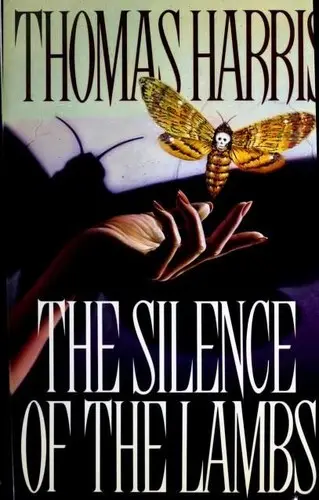
The Silence of the Lambs
Decide its fate
The record
Time
An eveningA season352 pages, about 7 hours: about the length of a typical book on the shelf.
Getting in
Walk right inSteep climbOne reader reports early friction adjusting to Harris’s changed style.
What it gives
Plot and actionIdeas to live byIn 15 reviews from critics and book blogs, 13 credit the plot and 3 credit the ideas or a change in how they live.
One of a kind
Others do thisNothing else doesOne review pairs it with The Girl with the Dragon Tattoo and In the Woods, on the shelf at 544 and 578 pages.
The case for it
on the writing
“Harris understands the crafting of literary terror as very few writers do”
Publishers Weekly, 1988 on the suspense
“A tour de force of suspense, dark and polished as onyx.”
Kirkus Reviews, 1988 on Lecter and Starling
“The relationship between Lecter and Starling slowly sinks its hooks into you”
four stars · a book blog on Hannibal Lecter
“Hannibal Lecter is a literary villain who stands above so many”
a book blog
The case against
on Buffalo Bill’s page time
“we don’t spend as much time with him, which is a shame”
a book blog on the character names
“the author’s continual use of full names long after the reader had a solid grasp”
five stars · a book blog on the forensic detail
“it would never have been tested in Catherine’s room, anyway”
Helen Pepper · CrimeReads, 2019 on character development
“some characters were robbed of further development and that the novel lacked some complexity”
a school newspaper