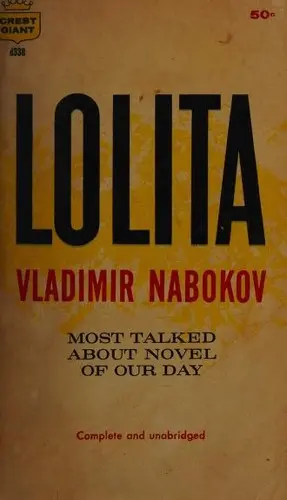
Lolita
Decide its fate
The record
Time
An eveningA season336 pages, about 7 hours: about the length of a typical book on the shelf.
Getting in
Walk right inSteep climbTwo readers report stalling at Humbert’s early definition of ‘nymphets’, one of them at page 16.
One of a kind
Others do thisNothing else doesA book blog rejects the common comparison to The Collector, and a Substack review calls Laughter in the Dark Nabokov’s best.
The case for it
on the first paragraph
“I fell in love with this book after the first paragraph.”
five stars · a book blog on real America
“a love affair with the real America”
R.W. Flint · The New Republic, 1957 on the prose
“a superbly florid and beautifully written book”
a book blog on the wordplay
“the language and wordplay was indeed delightful”
four stars · a book blog
The case against
on the length
“Three hundred pages of sex in the head.”
Jerry Talmer · The Village Voice, 1958 on the repetition
“praying that he would stop repeating himself and just for once say ‘freckles’”
two stars · a book blog on Humbert’s feelings
“Humbert’s feelings for Lolita are completely solipsistic.”
Roxana Robinson · LitHub, 2015 on the narration
“the entire book steeped in the mind of a pedophile rhapsodizing over a young girl”
Heather Bottoms · Book Riot, 2019