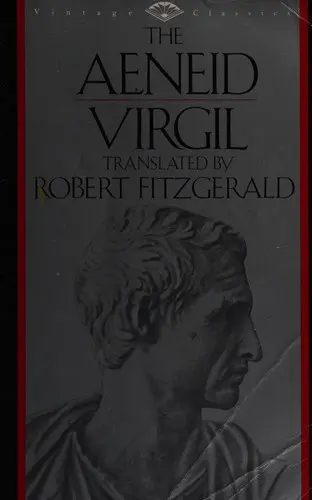
The Aeneid
The great poem of empire and its price. Aeneas carries his father from burning Troy and founds Rome; the cost is everything he has, including his love for Dido, his humanity, his happiness. Virgil's melancholy undertow ("sunt lacrimae rerum") transforms triumphalist epic into something far more troubled. Dante chose Virgil as his guide for good reason.
The back half of the poem, roughly Books 7 through 12, reads to plenty of readers as an unbroken run of battle carnage, what one calls “one long chest pound” with “too many names in it” to track. Held up against Homer, Aeneas comes off worse: readers say “Aeneas is no Achilles, Pallas no Patroclus,” and one gripes that “Aeneas is such a dweeb about the name-dropping,” citing his lineage at every turn instead of acting like a hero. Word-choice complaints follow the Fagles edition specifically, with readers checking the Latin and flagging swaps like heaven for Olympus and an overused word like awesome. Some readers report finding the whole poem simply boring, and question whether Rome needed its own answer to the Iliad at all.
The case for it and the rest of the canon open with Pro.