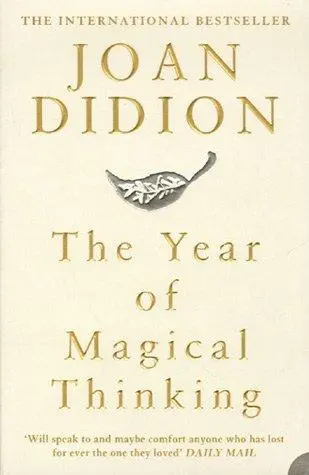
The Year of Magical Thinking
Didion's husband died at the dinner table. Within the year her daughter would die too. She wrote about grief with the precision of a scientist and the rawness of a child, cataloguing the magical thinking the mind uses to resist the unacceptable. Changed what it is possible to write about loss.
Status stays visible even in the memoir’s most intimate scenes. Reviewers point to Didion identifying a friend who eulogized her husband as “the great essayist David Halberstam,” a small tell, they argue, for wealth and connections that surface everywhere else too, Malibu real estate and fine china among the repeated targets. Others find the narrating voice too composed to land, seizing on a hospital social worker’s own description of her as “a pretty cool customer.” A parody circulating among detractors renames the book “The Year of Entitled Thinking,” and the harshest reviews call the tone “self-pitying, whiney, self-important,” arguing research-heavy digressions read as intellectualizing distance rather than actual grief on the page.
The case for it and the rest of the canon open with Pro.