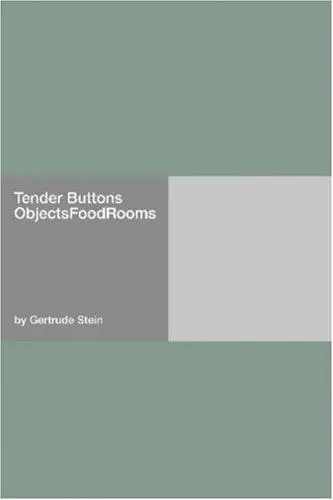
Tender Buttons
The most radical act in American poetry before Ginsberg. Stein's "Objects," "Food," and "Rooms" use language purely as musical and visual material, the meaning hovering between parody, cubism, and domestic lesbian eroticism. "A rose is a rose is a rose" is her most quoted line; the whole collection operates on the same principle, language freed from reference and given back to itself. Its influence on Language Poetry, conceptual poetry, and flarf is immeasurable.
The dominant complaint is that there's nothing underneath to decode. Unlike Joyce or even Hemingway, the words here don't obviously connect to each other or to anything else, so close reading pays out nothing. Skeptics note it rode partly on Stein's fame as a salon hostess and tastemaker, questioning whether the writing would draw this attention from an unknown. One reader tried mapping a throughline across a piece and failed, taking the failure itself as proof there wasn't one to find; another shrugged that “you can get away with writing basically anything.” A rarer verdict calls it “really just words thrown together at random.” A critic went further, naming it “a spectacular failure, a collection of confusing gibberish, and an intentional hoax.” Assigned for a class, it turns into duty reading fast.
The case for it and the rest of the canon open with Pro.