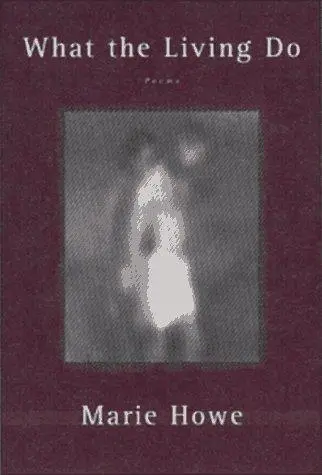
What the Living Do
Howe's elegy for her brother John, who died of AIDS complications, is the most intimate and formally plain collection of elegies since Hardy's. Where confessional poetry often uses grief to perform the self, Howe's poems are so specific (a pair of gloves, a grocery list, the particular way John held his fork) that they dissolve the self into loss and back again. The title poem is among the most beloved contemporary American poems.
Grief here stays particular to Howe and her brother John, and readers hoping for a general grief manual report it doesn't deliver that; at least one person found it unhelpful right after losing a parent. A more reserved review notes the book's power concentrates almost entirely in the title poem, writing of the rest, “À part le poème éponyme je n'ai pas été particulièrement touché.” Family poems are dense with names and shifting addressees, hard to track without rereading. Genuinely negative reviews are almost absent, only about two percent of ratings land at one or two stars, so the case against this book stays thin. What criticism exists treats the subject matter, sexual abuse, a sibling's death, as heavy enough to warrant a warning rather than a casual recommendation.
The case for it and the rest of the canon open with Pro.