Science
How the world works, found out the hard way. Darwin to Sagan.
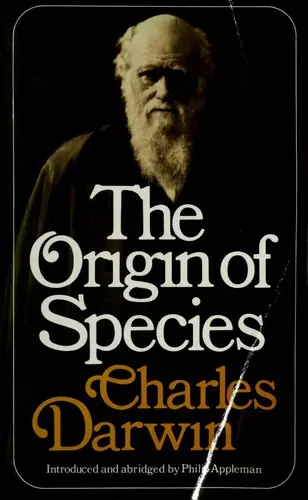
The smallest wing, and the only one where being wrong is the method. Darwin sat on his idea for twenty years because he knew what it would cost; the Origin is here, still costing. Sagan will make you love the universe and Kuhn will explain why the loving comes in revolutions. Watson’s Double Helix is shelved as a great book and a caution: the science was beautiful and the man took Rosalind Franklin’s data without asking. Read Feynman when the wing feels solemn. Everything in this room began as a heresy, survived its trial, and waits calmly to be overthrown in turn.
He restates the same case until readers want to tell him “enough already, I believe!” The geology and fossil chapters in the middle third are where momentum dies, dense enough to be “hard to read without losing flow.” The science underneath has aged in specific ways: Darwin had no mechanism of heredity, writing decades before Mendel, so long passages describe inheritance in terms we now know are wrong. Sceptics add that he “never truly gives an explanation for how microevolution can realistically extrapolate into macroevolution,” and one critic charges an “abuse of arithmetic.” The sixth edition most people own is the padded, hedged one; the tight 1859 first edition is a different book.
— against On the Origin of Species
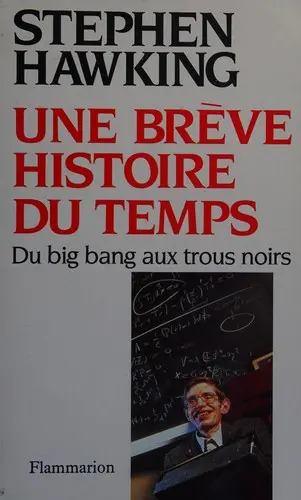
It is the definitive unread bestseller, “the most bought science book of all time... most likely gave up on after a chapter or two,” and an analysis of Kindle highlights found them all clustered near the start. The quantum chapters are where readers lose the thread, “dense and overwhelming as a crash course on theoretical physics,” and chapter 8 on imaginary time is “very nearly incomprehensible in this overly brief presentation.” Readers find “his explanations to be lacking and a lot of his conclusions weren't explained,” leaving them to take the no-boundary proposal on faith. One reading group's verdict: “I don't think this book lends itself to discussion.” Approach with caution.
— against A Brief History of Time
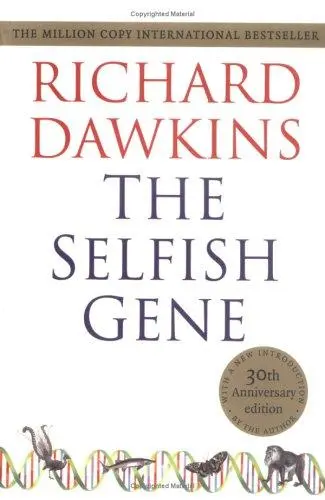
Critics say the title itself has spent fifty years being misread, that the shorthand “denatures the meaningful and well-established central concept of genetics” and that “too many people read it by title only.” The tone strikes readers as “contemptuous of the reader,” Dawkins “comes off as thinking a great deal of himself.” The middle stretch of kin-selection and game-theory math is the slog after the breezy opening. And the 1976 science is “almost out of date” on how genes actually get expressed and regulated. A harsher verdict holds that he “invented the word meme and basically nothing else,” and readers increasingly hear his combative public persona in the authorial voice.
— against The Selfish Gene
These 24 works open with Pro.