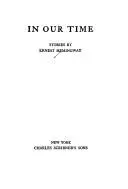
In Our Time
Hemingway's iceberg theory made flesh. The Nick Adams stories, the interchapters of war; this 1925 collection essentially created the aesthetics of American minimalism. Carver, Hempel, and a dozen others owe everything here.
The sparseness that fans call restraint reads to others as simply thin: several call individual stories bland, saying flatly “not a lot happened in them.” The prose gets called cold outright, one reader going as far as saying it “reads like it was written by a third-grader,” and the short italicized vignettes dropped between stories, war and bullfighting fragments, strike some as gratuitously violent rather than meaningful, dismissed as “gory stories about matadors.” The narrator's refusal to name a feeling or editorialize reads as wooden rather than controlled to unimpressed readers, who say the method just “leaves way too much to the imagination.” Story after story of violence and failed relationships with no letup wears down readers who came in hoping for variety.
The case for it and the rest of the canon open with Pro.