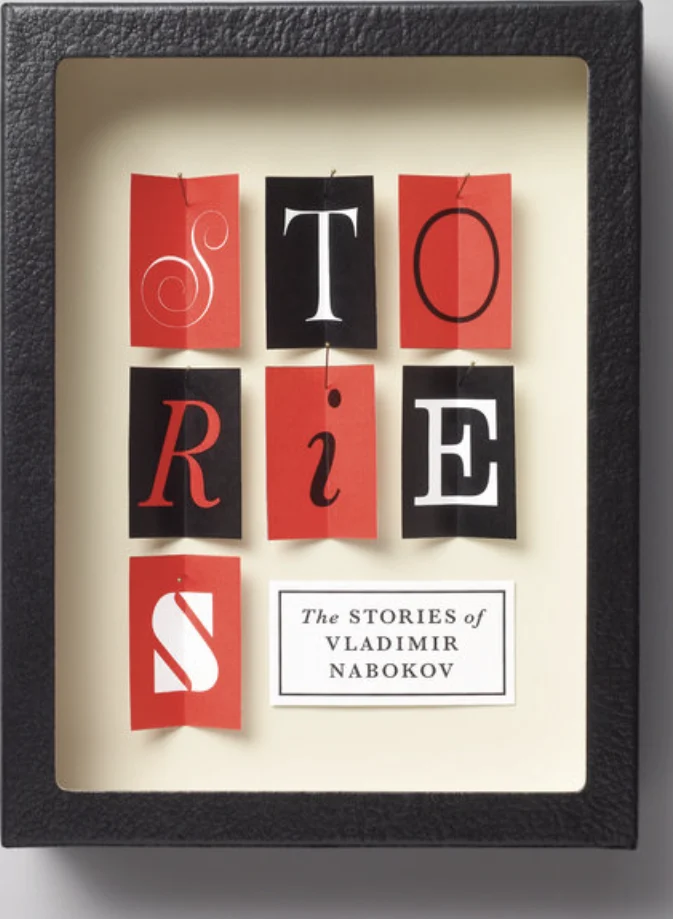
The Stories of Vladimir Nabokov
Sixty-five stories, written from his Berlin exile in the twenties to the mid-fifties, when he gave the form up for Lolita and Pale Fire. His son Dmitri gathered them in 1995, eleven of them Englished for the first time. The famous ones live here: 'Spring in Fialta,' 'The Vane Sisters,' and 'Signs and Symbols,' a few pages that may be the most argued-over short story of the century. Nabokov at short length is still Nabokov; every sentence is built like a pocket watch.
Six hundred eighty-five pages of Nabokov in one sitting wears readers down, one comparing it to “eating chocolate chip after chocolate chip” until the richness curdles. Untranslated French, German, and Russian phrases show up with no gloss, and at least one reader calls them “obvious obstacles that definitely nullify my understanding” at exactly the moments they'd want clarity. The earlier Russian-set stories cluster together bleak when several land back to back, and Nabokov himself comes through some pages as cold, one reader calling him “really full of himself” rather than empathetic toward his own characters. A critic singles out one story as “the most archly self-indulgent ghost story ever written,” and several readers admit a real share of the sixty-five are forgettable next to the acknowledged classics.
The case for it and the rest of the canon open with Pro.